

Choosing a partner involves learning about another person and deciding whether the relationship fits both of you. A strong feeling can matter without settling every practical question or guaranteeing a shared future.
If the idea of a soulmate is meaningful to you, you can keep that personal meaning while considering everyday behaviour, compatible intentions and the freedom to choose. You do not need certainty about destiny before asking what a relationship is like now.
In this article
1. Clarify your priorities
Think about the relationship you want to take part in. Consider companionship, commitment, shared responsibilities and room for your own friendships or interests. Choose a few priorities that would make a practical difference to your life.
Ask what each priority looks like in action. “I want honesty” might include discussing changes to a shared plan. “I need independence” might include time alone and the ability to make your own choices. Leave room to hear what those words mean to the other person too.
2. Separate needs from preferences
A partner does not have to match every imagined detail to be compatible with you. At the same time, accepting ordinary differences does not require giving up an important need. It can help to distinguish:
- Essentials: treatment and agreements you need, such as respect for a refusal.
- Preferences: things you would enjoy but may be flexible about, such as sharing a hobby.
- Questions: matters that need discussion, such as where you hope to live or the commitment you want.
Review the list as you learn more. It should help you make choices, rather than become a test another person must perform perfectly.
3. Let time reveal information
Attraction can begin quickly or develop gradually. There is no single timetable that tells you whether a connection will last. You can enjoy an early feeling while taking time to understand each other.
Notice ordinary interactions: making plans, handling a change, hearing a preference or responding to disappointment. One enjoyable date cannot answer every question, and one awkward moment does not explain someone’s whole character.
You can choose a pace that fits your circumstances. Wanting more time is not an obligation to continue dating indefinitely if you already know you want something different.
4. Discuss important differences directly
Bring up a subject that matters rather than waiting for chemistry to resolve it. You might ask, “What does a committed relationship mean to you?” or “How would we make room for both our routines?”
The NHS guidance on maintaining healthy relationships encourages open conversation and checking that you understand the other person. If a disagreement becomes heated, taking a pause and returning when calmer can make discussion more manageable.
A respectful conversation may still reveal incompatible goals. You do not have to persuade somebody into wanting children, a particular commitment or the same future you want.
5. Notice everyday respect
Ask whether both people can say no, keep private information private and maintain connections outside the relationship. Consider whether you can raise a concern without being insulted, pressured or threatened.
Affection does not remove the need to address harmful behaviour. If you feel controlled or unsafe, seek trusted support with considering safer options. You do not have to establish whether someone is your destined partner before protecting yourself.
6. Choose a next step with the information available
Your next step might be another date, a specific conversation, more time to consider a question or ending the dating arrangement. Explain what you can where it is appropriate and safe, while respecting the other person’s choices.
You can care about someone and still decide that the relationship does not fit. You can also choose to keep learning together without promising that every uncertainty will disappear. A thoughtful choice leaves room for both hope and new information.
Read the infographic in text
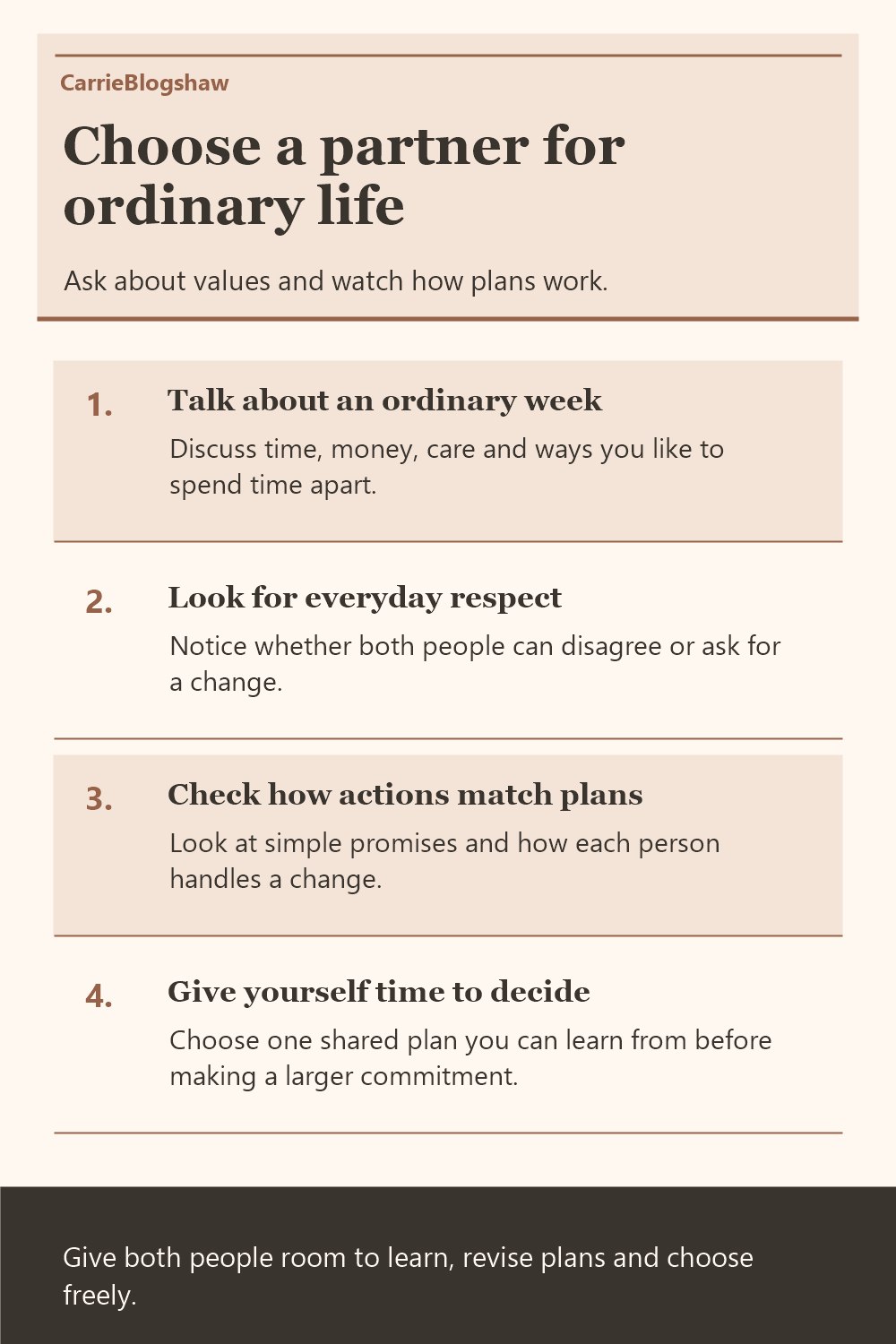
Choose a partner for ordinary life
Ask about values and watch how plans work.
- Talk about an ordinary week Discuss time, money, care and ways you like to spend time apart.
- Look for everyday respect Notice whether both people can disagree or ask for a change.
- Check how actions match plans Look at simple promises and how each person handles a change.
- Give yourself time to decide Choose one shared plan you can learn from before making a larger commitment.
Give both people room to learn, revise plans and choose freely.