

Dating someone with a relationship history can raise questions about contact with an ex, conversations about the past and what each of you wants now. A social-media connection or a difficult memory cannot, by itself, tell you whether someone is ready to date.
Focus on the situation you can discuss: what is happening, how it affects you and what agreement or decision you need. These eight questions offer a starting point.
In this guide
- What does readiness mean for you?
- How much discussion of the past is useful?
- Are complaints crowding out your relationship?
- What is the context for contact or old posts?
- What do you both want to share?
- Is the pace comfortable for both of you?
- What agreements are being followed?
- What next step do you want to take?
1. What does readiness mean for you?
Start with what you need from the relationship now. Are you looking for exclusivity, a slower getting-to-know-you stage or a clearer answer about what the other person wants?
You do not have to establish that someone has erased every feeling or memory of a previous relationship. The more practical question is whether what they are offering fits what you want and whether they treat you respectfully while you find out.
2. How much discussion of the past is useful?
A partner’s history can help you understand their life. It can also become difficult if you feel that your time together is mostly a review of their previous relationship.
Describe the particular pattern: “We have spent much of our last two dates discussing your breakup. I’d like more time to get to know each other.” Ask what they want from the conversation rather than assuming every mention means they want their ex back.
3. Are complaints crowding out your relationship?
You can listen to a difficult experience without agreeing to be someone’s only source of support. Decide what you have room to hear and when you would prefer a different conversation.
A useful boundary might be, “I can listen for a while, but I cannot keep returning to this tonight.” Repeated complaints may be affecting your experience of the relationship even when you cannot know exactly what they mean about your partner’s feelings.
4. What is the context for contact or old posts?
A friendship connection, an old photograph or contact with an ex does not tell you the whole story. There may be children, shared responsibilities, work or a social circle involved. Ask about the context when it affects you.
Be specific about the concern: an unclear arrangement, a broken agreement or how much time you have together. Avoid turning access to private messages, deleting every photograph or cutting off all contact into a universal test of commitment.
You can decide what arrangements you are comfortable with while recognising that the other person also has responsibilities and choices.
5. What do you both want to share?
A question about your past is not automatically evidence of guilt or a hidden motive. You can ask why the person wants to know and decide what you feel comfortable discussing.
Share what is relevant to the relationship you are building, at a pace that works for you. You do not owe a detailed account of every breakup or painful experience. Similarly, you can respect a partner’s privacy while asking for information that matters to an agreement between you.
6. Is the pace comfortable for both of you?
If a new partner wants a commitment sooner than you do, address the pace itself. “I am not ready to move in” is a clear preference; you do not need to diagnose insecurity or prove that an ex is the reason.
Notice whether the person accepts your answer or keeps pushing. You can slow down, decline a proposed step or decide not to continue. A relationship does not become suitable merely because you can explain why the other person wants it to move quickly.
7. What agreements are being followed?
Focus on the agreements you have actually made. If you agreed to a particular plan or boundary, are both of you following it? If the agreement was unclear, discuss what each person understood.
For example, “I expected us to have this evening together; can we talk about the change?” identifies a problem you can address. It is more useful than trying to settle someone’s entire emotional history from one event.
The guide to discussing care and commitment offers more questions about contact, privacy and shared plans.
8. What next step do you want to take?
Your next step could be a conversation, a slower pace, a clearer agreement or a decision to leave. You do not need certainty about someone’s feelings for their ex before considering whether this relationship works for you.
The NHS guide to healthy relationships discusses listening, boundaries, outside support and taking a break from a difficult conversation. It also recognises that you can leave a relationship that does not feel right.
If you fear intimidation or retaliation, seek individual support rather than assuming you must confront your partner immediately. You can take your concerns seriously without turning them into a claim that you can read another person’s mind.
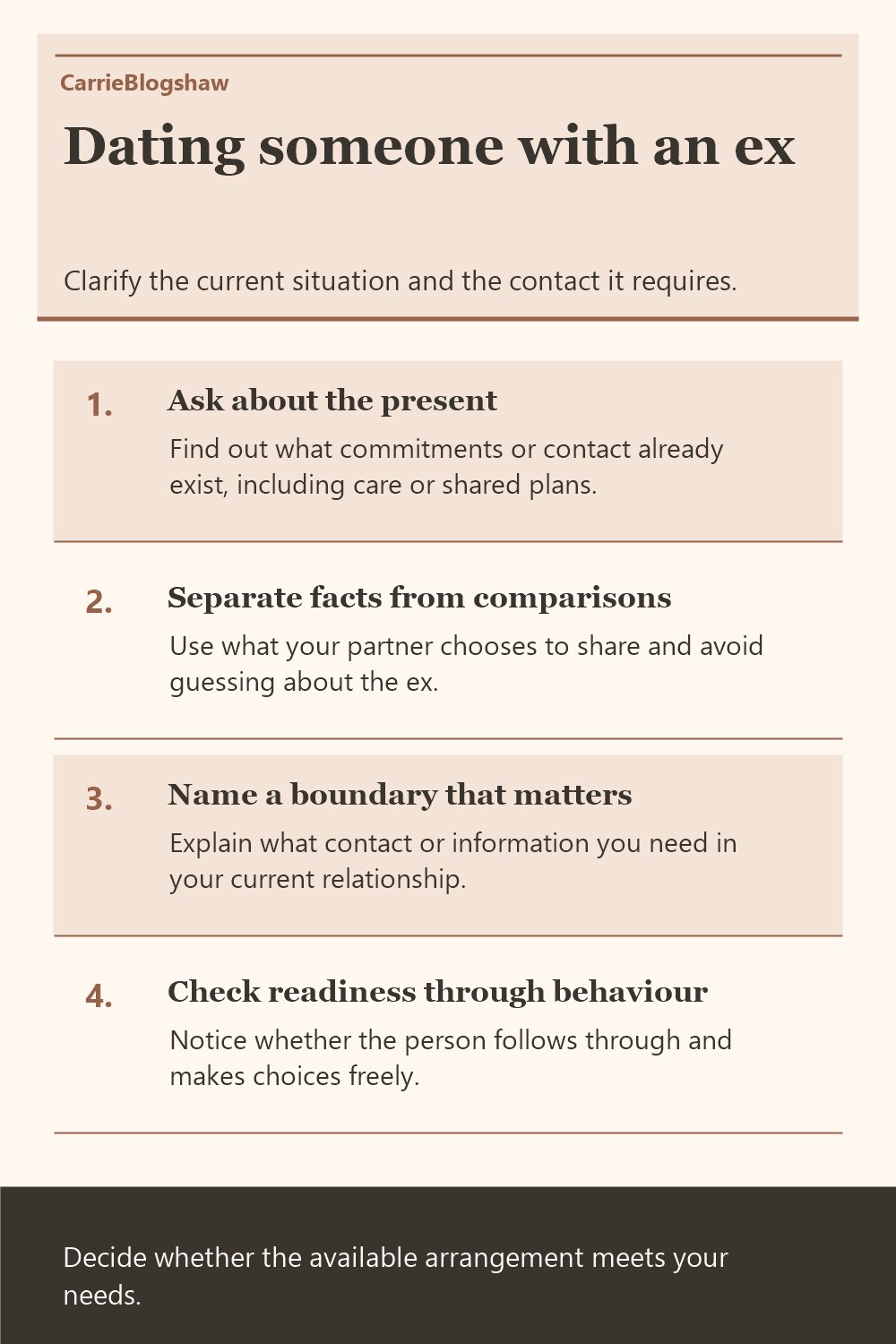
Read the infographic in text
Dating someone with an ex
Clarify the current situation and the contact it requires.
- Ask about the present Find out what commitments or contact already exist, including care or shared plans.
- Separate facts from comparisons Use what your partner chooses to share and avoid guessing about the ex.
- Name a boundary that matters Explain what contact or information you need in your current relationship.
- Check readiness through behaviour Notice whether the person follows through and makes choices freely.
Decide whether the available arrangement meets your needs.