

Someone can matter deeply to you without remaining your partner or closest friend for the rest of your life. A connection may change because your circumstances, wishes or ways of relating no longer fit as they once did. You can value what happened while deciding what kind of contact, if any, works now. There is no need to label one person your exciting past and another your guaranteed future before you can make a thoughtful choice.
In this article

Name the relationship you have now
Begin with what is actually happening. Are you both asking for a friendship, discussing a romantic relationship, keeping occasional contact or taking time apart? A history of closeness does not answer those present questions by itself.
If the arrangement is unclear, ask directly when you want to and it feels safe. “I’d like to understand whether we’re trying to be friends or considering dating again” gives the other person something specific to answer. Listen to the answer rather than treating uncertainty as a promise.
You may discover that you want different things. That can be painful without meaning that either person’s earlier feelings were false. Decide whether the relationship currently available is one you freely want to take part in.
Let meaning exist without a promise of forever
A relationship may have brought affection, excitement, companionship or experiences you still value. It may also have involved disappointment or harm. You do not have to turn it into a perfect story to acknowledge why it mattered.
You might describe the bond as a soulmate connection. That can express a personal or spiritual understanding of your experience; it cannot establish what the other person wants or guarantee lifelong contact. Their choices and your own boundaries still matter.
A strong feeling also does not require an immediate decision. You can notice affection, longing or curiosity and give yourself time to consider what acting on it would mean. Intensity alone cannot tell you whether a relationship is respectful, mutual or workable.
Discuss contact and personal limits
If you both want contact, talk about the shape of it. Occasional messages, meeting as friends and trying a relationship again create different expectations. Clarify what each of you is offering instead of relying on old habits to decide.
You might say, “I’m comfortable meeting for coffee, but I don’t want to talk as though we are still a couple.” You can also decline contact or ask for a break. Friendship after romance is an option both people can consider, not a reward owed to someone for having loved you.
The love is respect guidance on respecting boundaries explains why another person’s limits deserve attention. Previous intimacy does not create a right to messages, personal information, physical affection or an immediate reply.
If someone responds to a limit with threats, monitoring or intimidation, put safety ahead of trying to achieve a perfect conversation. Confidential support can help you consider how to step back safely.
Make choices that fit your present life
A meaningful past connection does not require you to organise your current life around it. Consider your time, responsibilities and the relationships you choose now. Ask whether the contact available leaves room for those parts of your life.
If you have a current partner, discuss relevant agreements honestly. People differ in what contact with an ex or a close friend means to them. Specific conversations about plans and behaviour are more useful than assuming that jealousy proves love or that concern automatically justifies control.
A new relationship does not have to be less exciting to be dependable, and a past relationship does not become the better choice because it felt intense. Notice how people follow through, handle disagreement and respect your answers. Neither relationship can come with a guarantee about the future.
You can also choose not to date. Time alone, friendships and other parts of life can matter without serving as a waiting room for the person you will supposedly marry.
Give yourself room to adjust
A changed connection can involve loss even when there was no formal breakup. You may miss familiar routines, an imagined future or the version of yourself you experienced with that person. Those feelings do not mean you have made the wrong decision about contact.
Choose support that leaves you room to think. A trusted person can listen without insisting that you reunite, become friends or find someone new. If distress is persistently affecting daily life, consider support from a qualified professional.
Review the arrangement as you learn how it feels in practice. You might continue a friendship, reduce contact, ask another clear question or leave the connection in the past. Valuing someone and choosing a different kind of relationship can both be honest decisions.
Read the infographic in text
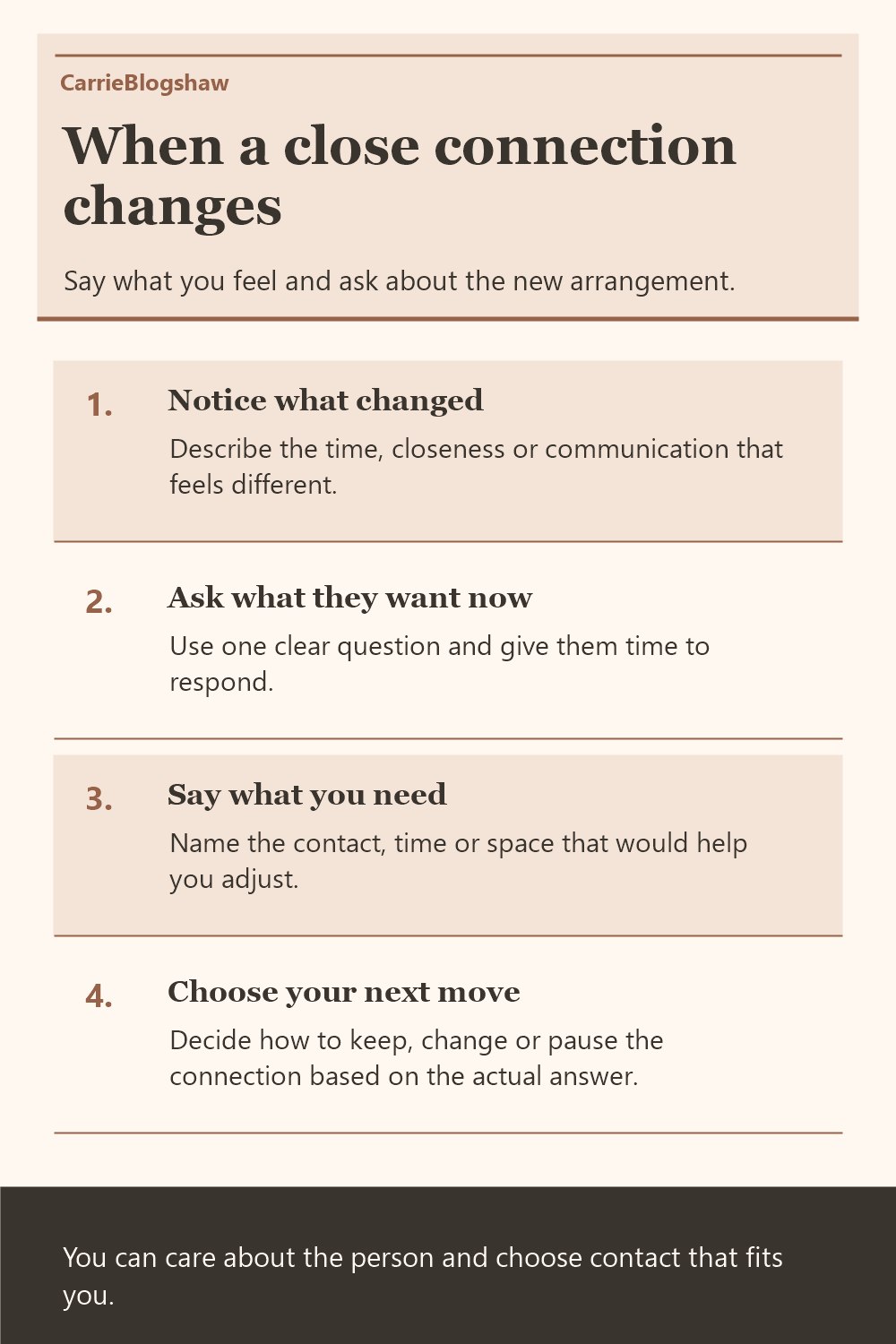
When a close connection changes
Say what you feel and ask about the new arrangement.
- Notice what changed Describe the time, closeness or communication that feels different.
- Ask what they want now Use one clear question and give them time to respond.
- Say what you need Name the contact, time or space that would help you adjust.
- Choose your next move Decide how to keep, change or pause the connection based on the actual answer.
You can care about the person and choose contact that fits you.