

When friends are married or partnered, group plans can start to centre on schedules and routines that leave you out. Name the connection you miss and try one specific invitation while making plans that suit your own life.
Name what changed in your friendships
If you feel left out, this can be about different needs. You might miss having one on one time with someone, setting plans, sharing jokes or having support. You need to say what’s happening before you try to change. More dating might not fix lacking friends. A big party can’t give you a quiet conversation with someone you miss.
Ask yourself what would make you feel more included. Describe what you feel and allow yourself room to change things. If you’re missing a friend, talk about how that feels and see how you can change it.
Make a specific invitation
Make the invitation clear instead of waiting for the old patterns to come back on their own. You can say something like, “I miss talking one on one with you. Could we have a short catch up this month?” This is easier to answer than stating a broad sentence that everything changed.
Your friend might have new responsibilities but remember that you also have limits. Look for an arrangement that fits you both such as a call or a walk.
According to the CDC’s guidance on improving social connectedness it includes maintaining connections and sharing ordinary activities. The practical form can change without making the friendship meaningless. You do not need identical lives to stay close, but you may need more explicit planning than before.
Talk about feeling left out
When you’re single and most of your friends are in relationships, you might notice that many of their plans revolve around couples. Maybe they regularly plan double dates, romantic weekend trips, or dinners where everyone brings their partner. While there’s nothing wrong with couples spending time together, it can sometimes leave you feeling uncomfortable or like you don’t really fit in.
Instead of keeping those feelings to yourself, try having an honest conversation with your friends. For example, you might say, “I’d love to spend time with everyone, but sometimes I feel a little out of place when all the activities are planned around couples. Maybe we could do something as a group that everyone would enjoy.”
You could suggest going out for lunch, having a game night, attending a community event, or planning another activity where everyone can participate without focusing on their relationship status. Remember to consider things like cost, transportation, and everyone’s individual needs when making plans.
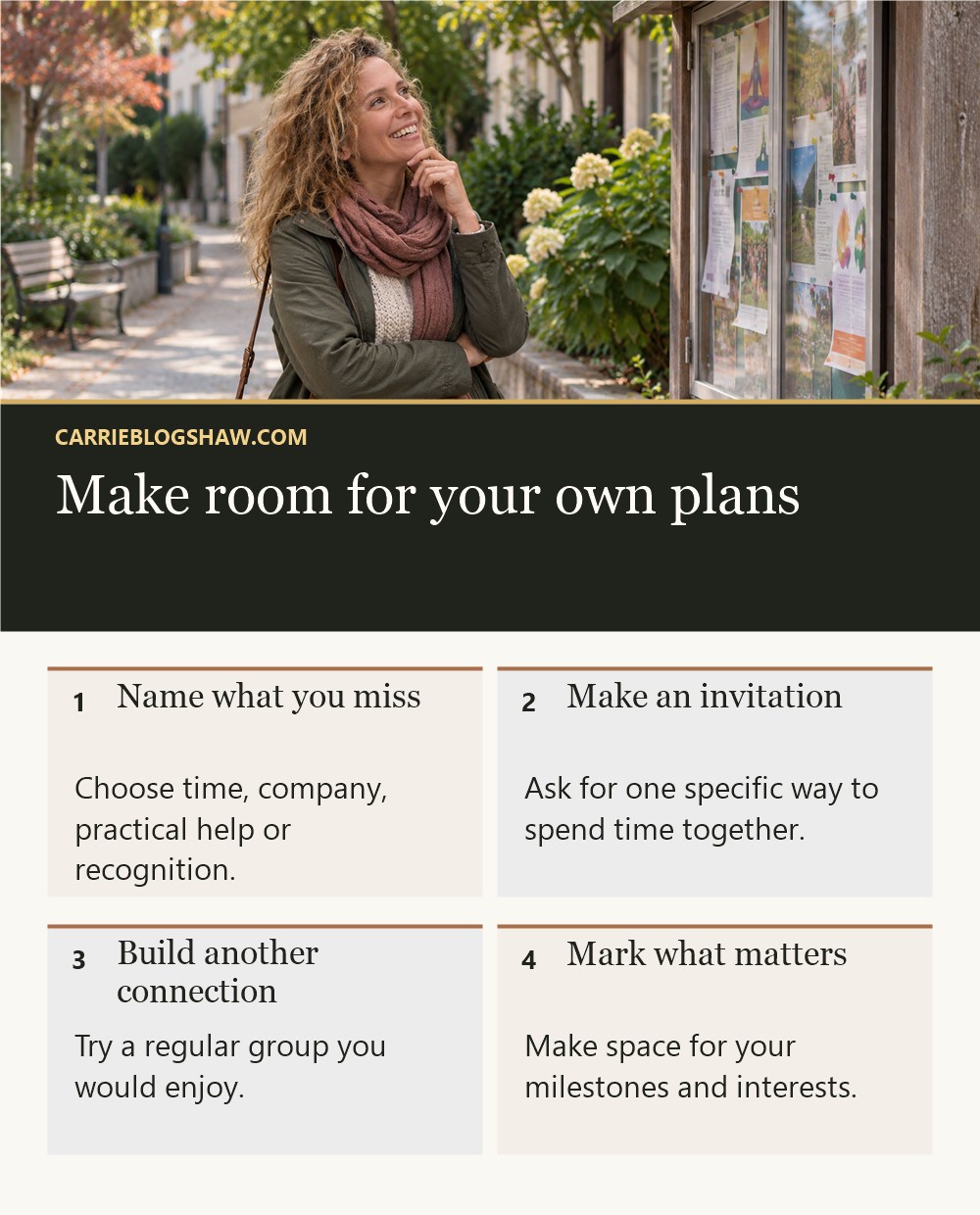
Read the visual guide as text
- Name what you miss. Choose time, company, practical help or recognition.
- Make an invitation. Ask for one specific way to spend time together.
- Build another connection. Try a regular group you would enjoy.
- Mark what matters. Make space for your milestones and interests.
Build connections around repeated activities
Having a close circle can be important and can help you to find people that have the same hobbies. You can also meet new people through volunteering, working or online. Different connections can give different kinds of company.
Pick what kind of company you would enjoy. Familiar contacts can give you more room for conversations than thinking that every event needs to have a close friendship.
You don’t have to get rid of your married friends and replace them with single friends, but you can look for people that have the same values and enjoy the same things you do. Some might share your relationship status of being single and some might not. A bigger network can take away pressure on one friendship and give you different kinds of connections.
Give your milestones attention
Things like a qualification, a creative project, a move, a recovery step, or a meaningful anniversary can deserve recognition. You do not need to wait for a romantic milestone to invite people to celebrate.
Tell friends what this means and find out what they would like. You can say something like, “I finished a class and would like to go out to eat together.” This gives them a clear invitation.
Don’t turn a celebration into comparing yourself with them or their children. The purpose is to see what matters and not to compete over whose event deserves more. You can celebrate privately if this fits for you. A milestone can stay meaningful even if the gather is small, the budget is limited or you don’t want to explain every detail.
Ask for practical support
Think about a need such as having an emergency contact, needing a ride somewhere or having help when your sick. A partner isn’t the only kind of support you should have. Of course, you need to ask about listing a person as a contact before doing it. Be specific about it and what it means. You might need to have different people for different things instead of just one person.
If you have a small circle, ask for other local resources. Don’t just think that not having support means you’ve failed. A good plan needs to reflect what is available to you and what’s missing. Naming what you need gives you a clear thought about getting help instead of thinking that you have to be self-sufficient because you’re single.
Set limits on unsolicited dating advice
Prepare a short response if there are a lot of suggestions. You can say something like, “I’ll ask if I want to be introduced,” or you can say, “I’m open to dating but I don’t want this to become a discussion about my status.”
You can still accept the introduction if you want but you can decline it without feeling bad. Your interest is enough information on the decision. If they keep giving you advice, repeat what you want to say and don’t give in to pressure.
A friend can mean well and not pick up the cue. You don’t have to spend every event reassuring people that you’re doing enough. The friendship needs to have room for your interests, work and your daily life beyond the question of when you will find a partner.
Make space for help with loneliness
Loneliness can affect people in all situations. You don’t have to ignore it because you want to show that being single is okay. If you feel sad, isolated or stressed or it is affecting your everyday functioning, think about getting professional support. A professional can look at the overall picture. But if you feel like harming yourself, this is an emergency situation and get help right away.
Frequently asked questions
1. How can I stay close to friends whose schedules changed?
Suggest one specific, manageable plan and ask what timing works for them. A recurring walk or a brief call can be easier to keep than an open-ended invitation.
2. What can I say when plans always revolve around couples?
Describe what you’ve noticed and suggest a different plan. Try “Could we get coffee just the two of us next week?”
3. What if I’m happy for my friends and feel lonely at the same time?
Both feelings can belong in the same day. Use the loneliness to identify what you want more of, such as regular company or someone to share news with.
4. How can I meet new people without focusing on dating?
Choose a repeat activity you enjoy, such as a volunteering shift, class or book group. Give connections time to grow through familiar contact.
5. How can I respond to unsolicited dating advice?
Say what kind of conversation you want. For example, “I’m happy to tell you about my weekend. I’d prefer to leave dating advice for another time.”