

If you keep initiating contact, arranging plans or trying to secure a clear answer, dating can begin to feel like a chase. Start by identifying what is happening and what you want, rather than deciding which person needs to win.
You can show interest openly while respecting the other person’s choices and your own limits. You do not need a strategy that makes somebody jealous, dependent or afraid of losing you.
In this article
1. Name the pattern before interpreting it
Describe what you can observe: “I have suggested the last three plans, and none has been confirmed.” That is different from “They want me to chase them.” You may not know why contact feels uneven.
Consider whether you have discussed expectations. People can differ in availability and communication habits without playing a game. A direct question can help you learn whether there is an arrangement that suits both of you.
2. Make your interest clear
If you want to date someone, try a clear invitation rather than a series of hints: “I would like to take you on a date. Would you be interested?” Offer a manageable plan and room for an honest answer.
If you are already dating, ask about the issue that matters. “I would like us both to suggest plans” is a practical request. Deliberately delaying replies or pretending to have other dates may make it harder to understand one another.
3. Respect the answer, including a refusal
If someone says no, asks you to stop contacting them or wants a different relationship, take that information seriously. Repeated messages, unexpected visits or attempts to create jealousy do not turn a refusal into consent.
A vague answer may leave you disappointed. You can ask one practical clarifying question where appropriate, then choose how long you are willing to leave a plan open. You do not have to keep pursuing an answer to establish your worth.
4. Keep your own boundaries
You can decline an invitation, take time before sharing personal information and choose a slower pace. Being pursued does not create an obligation to return someone’s feelings or disclose more than you want to.
Openness can be gradual. You do not have to remove every protective boundary to prove that you are capable of love. If you want to become more comfortable with honest conversation, begin with a small preference or request that feels manageable.
Apply the same respect to the other person. Their privacy, time and friendships are not obstacles you need to overcome.
5. Reclaim some of your attention
If checking for messages is taking over your day, choose a practical limit. You might mute a conversation for a while, put the phone away during a meal or decide when you will check it next.
This is a choice about your own time, rather than a tactic to provoke a reaction. Keep plans with friends and attend to responsibilities or interests that matter to you. An uncertain connection does not have to occupy every available moment.
6. Choose an arrangement that works for you
Ask whether the relationship available now includes the interest, effort and respect you want. You may decide to continue getting to know each other, ask for a clearer agreement or step back.
You can say, “This level of uncertainty is not working for me, so I am going to stop making dating plans.” You do not need to prove that the other person meant harm before choosing a different arrangement.
Mutual interest leaves both people room to choose. It cannot be secured by pressure, constant availability or winning a chase.
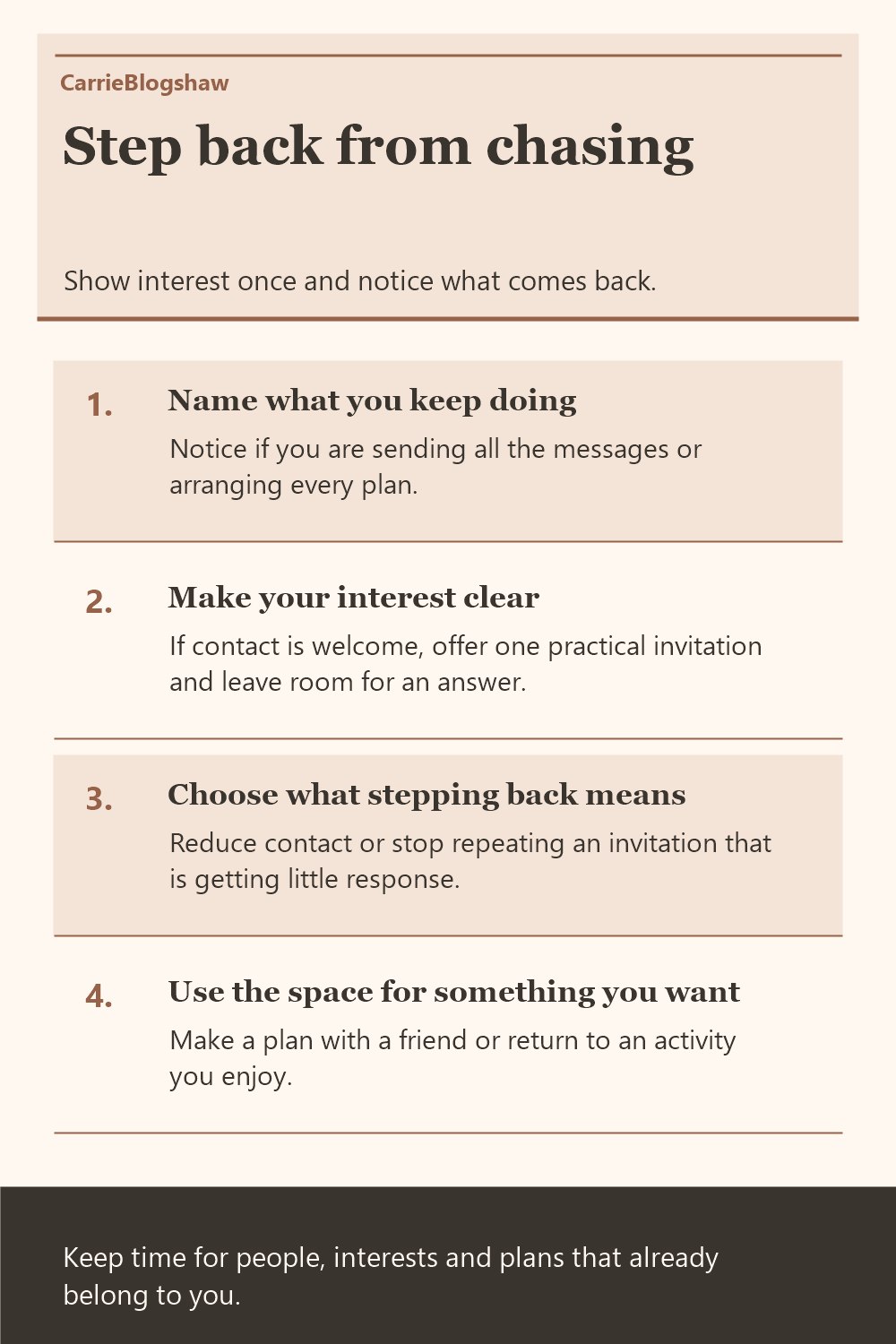
Read the infographic in text
Step back from chasing
Show interest once and notice what comes back.
- Name what you keep doing Notice if you are sending all the messages or arranging every plan.
- Make your interest clear If contact is welcome, offer one practical invitation and leave room for an answer.
- Choose what stepping back means Reduce contact or stop repeating an invitation that is getting little response.
- Use the space for something you want Make a plan with a friend or return to an activity you enjoy.
Keep time for people, interests and plans that already belong to you.