

Wanting love after a painful relationship can bring hope and hesitation at the same time. You may want to meet someone while also needing more rest, clearer boundaries or a slower pace. There is no deadline that makes your next relationship count.
A useful dating plan focuses on choices you can make: what you want, how you meet people and what treatment you accept. Another person’s interest and readiness remain their own.
In this article
1. Choose your pace
Ask what you have room for now. That might be one conversation, an occasional date or a break from dating. You do not have to feel completely confident before meeting someone, and you do not have to date simply because other people think it is time.
If you are still recovering from hurt, consider what would make dating manageable: shorter meetings, fewer conversations at once or support from someone you trust. You can revise that pace as you learn how it feels.
2. Learn without blaming yourself
Identify a lesson you want to carry forward without making yourself responsible for another person’s harmful behaviour. “I want to discuss exclusivity directly” is a practical intention. “I caused someone to deceive me because I was afraid” places responsibility in the wrong place.
You do not have to forgive an ex, forget what happened or resume contact to begin again. Keep the boundaries that help you. Where past experiences are causing ongoing distress, qualified support can be part of moving forward.
3. Name your priorities
Make two short lists: what you need in a relationship and what would be pleasant but flexible. Respect for your boundaries might be essential; sharing every hobby might not be. Include practical matters such as availability, location or whether you want children.
Describe these priorities in ordinary language. “I want a relationship where we can discuss disagreements without insults” gives you something to notice. A vague search for a perfect person offers less help when deciding whether to meet again.
4. Create manageable opportunities
Choose a way of meeting people that fits your interests, access needs and budget. You might try a recurring activity, accept an introduction or arrange a brief public date. An activity can still be worthwhile if it leads to friendship or an enjoyable evening rather than romance.
You do not need to force yourself into settings you dislike to prove you are trying. At the same time, a small, chosen experiment may help you discover what suits you better than waiting for the ideal opportunity.
5. Keep online dating practical
If you use an app, state your intentions honestly and choose how much time you want to spend there. A paid subscription does not establish that another user is honest or wants the same relationship you do.
Keep early meetings public, protect private information and retain an independent way home. The FTC’s romance-scam guidance explains why requests for money from an online romantic contact need caution. Do not send money or gifts to someone you have not met in person.
6. Notice mutual effort
Ask whether interest goes both ways. Can you ask questions, express a preference and decline something without pressure? Are plans and expectations discussed rather than left for you to guess?
You can say, “I am interested in getting to know you, and I am looking for a relationship. What are you hoping for?” Their answer may reveal a mismatch. You do not have to persuade them into wanting the same thing.
7. Review the plan kindly
After a few experiences, consider what you enjoyed, what felt draining and what you would change. Adjust the activity, app use or pace before concluding that your whole future has been decided.
A date ending without a relationship is not proof that you failed. You can want lasting love while also building friendships, routines and interests that deserve attention now.
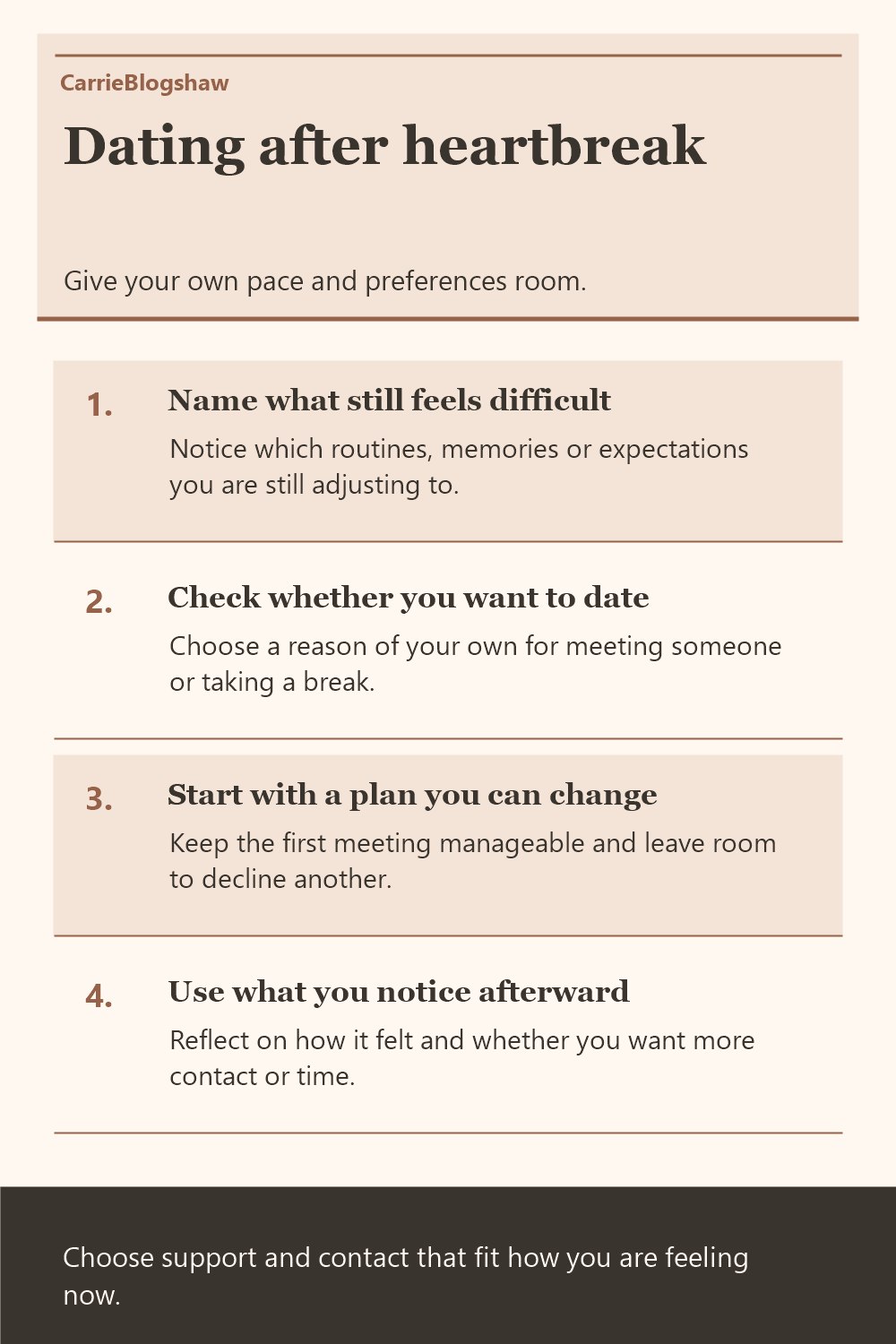
Read the infographic in text
Dating after heartbreak
Give your own pace and preferences room.
- Name what still feels difficult Notice which routines, memories or expectations you are still adjusting to.
- Check whether you want to date Choose a reason of your own for meeting someone or taking a break.
- Start with a plan you can change Keep the first meeting manageable and leave room to decline another.
- Use what you notice afterward Reflect on how it felt and whether you want more contact or time.
Choose support and contact that fit how you are feeling now.